Ásmundarsafn Museum
Reykjavík Art Museum
Wonderland: Finnur Arnar with a Work in Progress
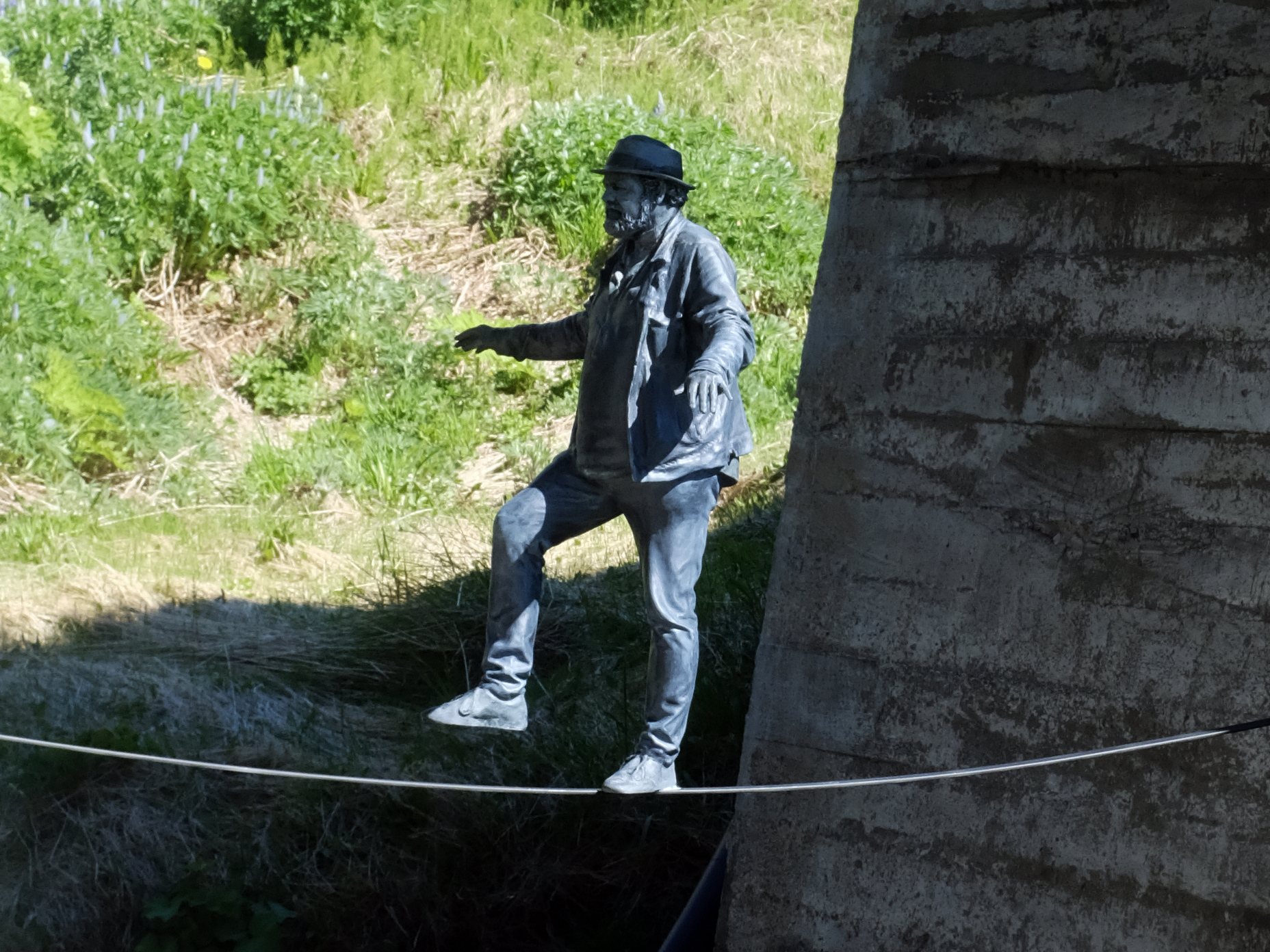
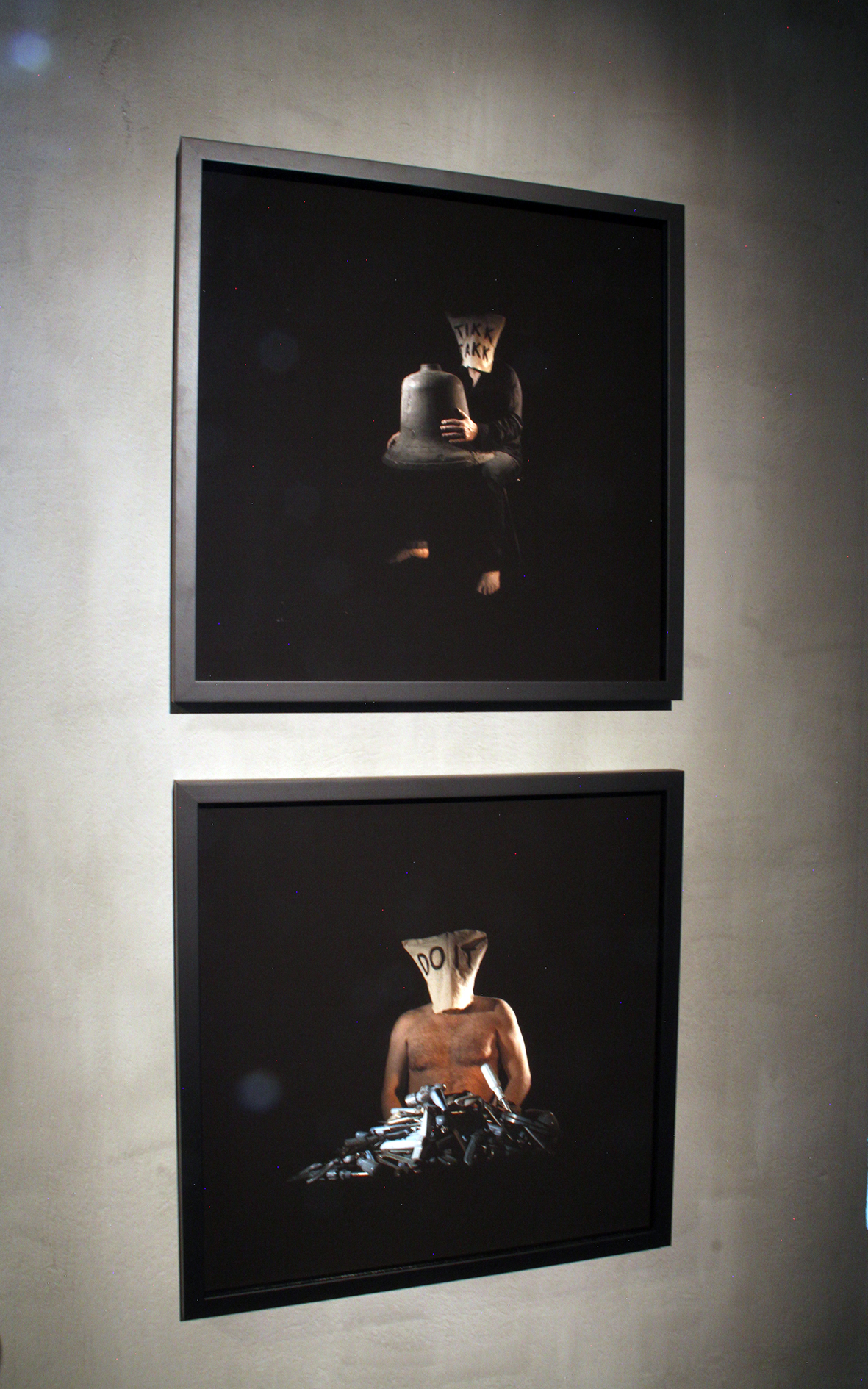
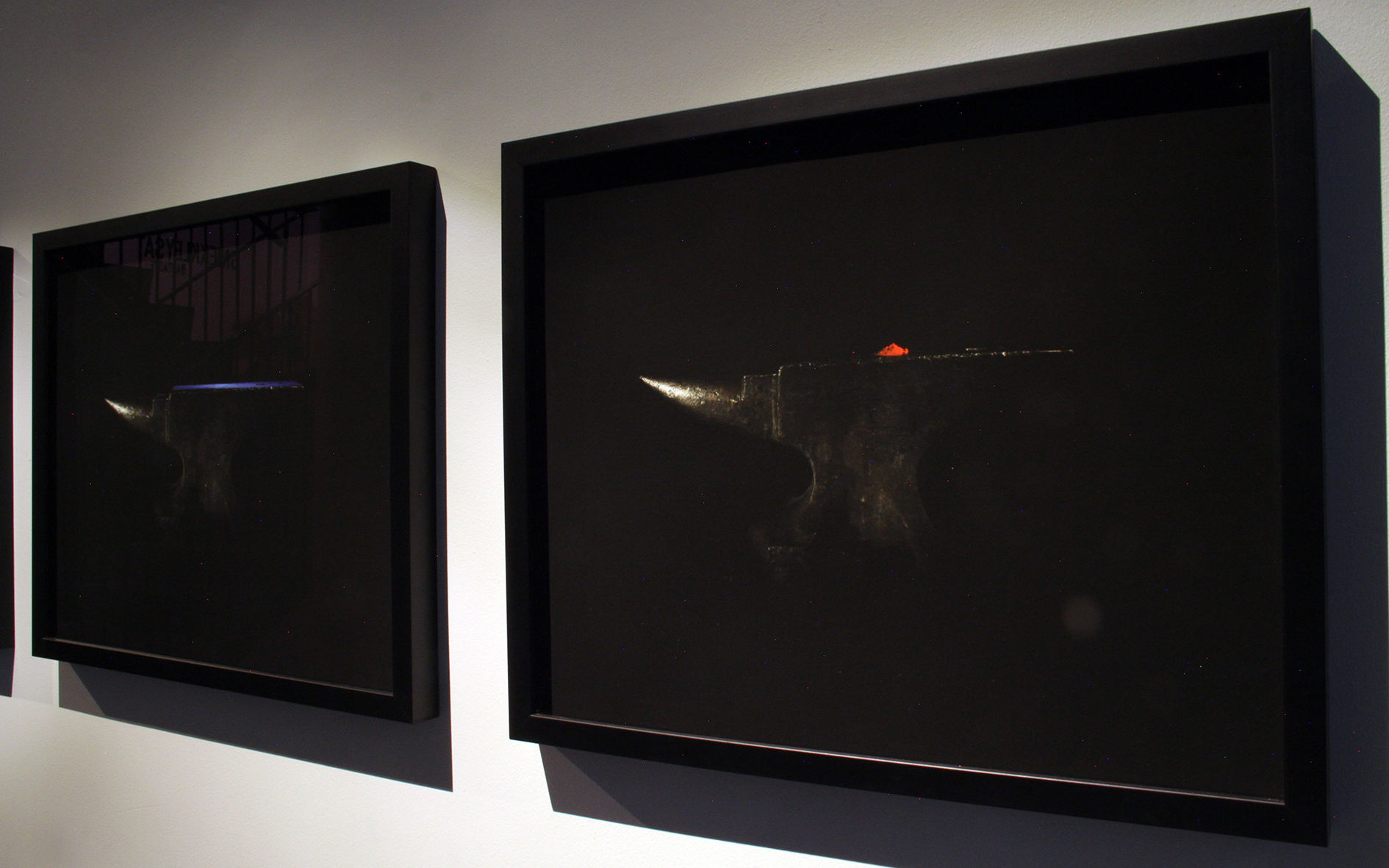
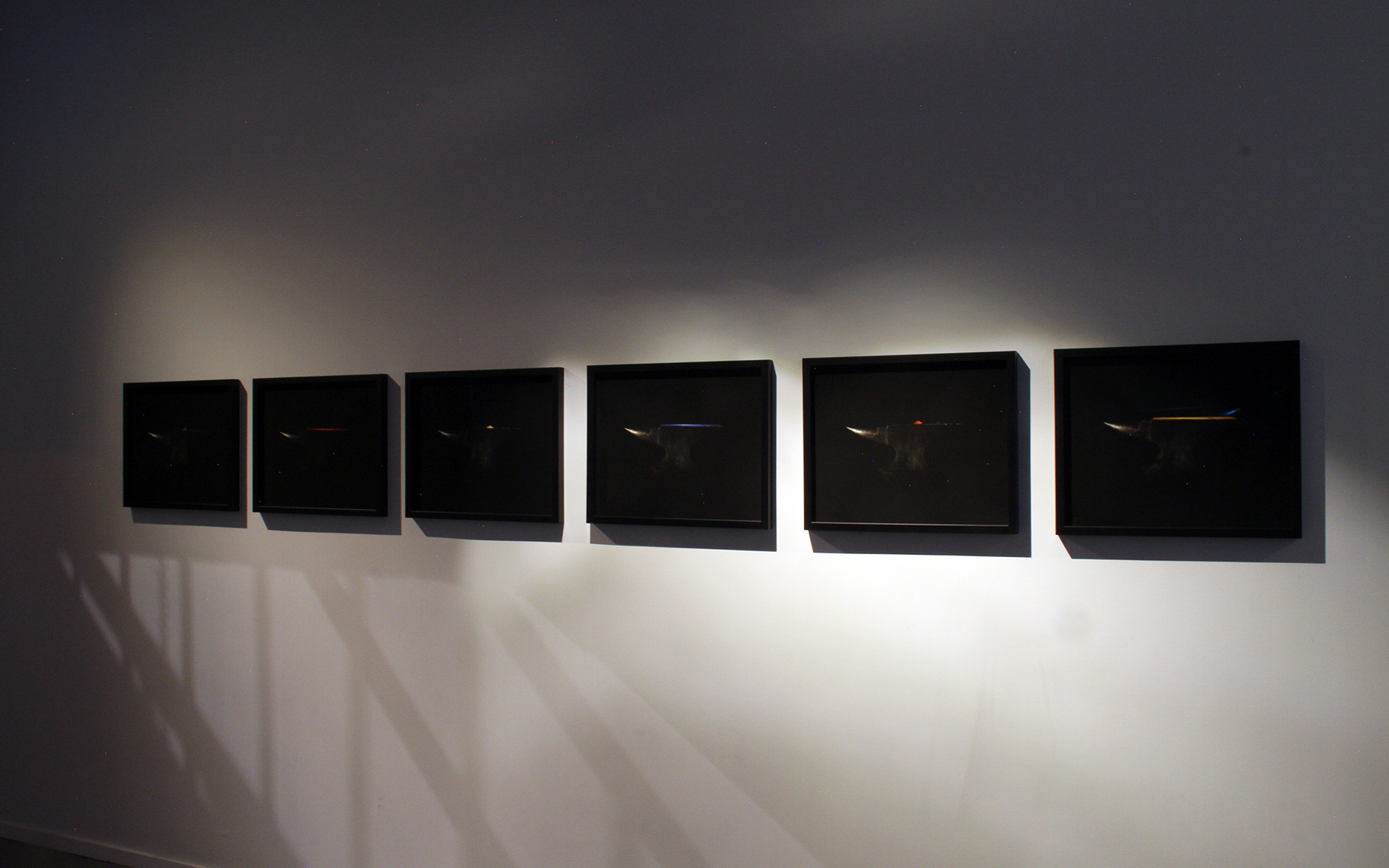
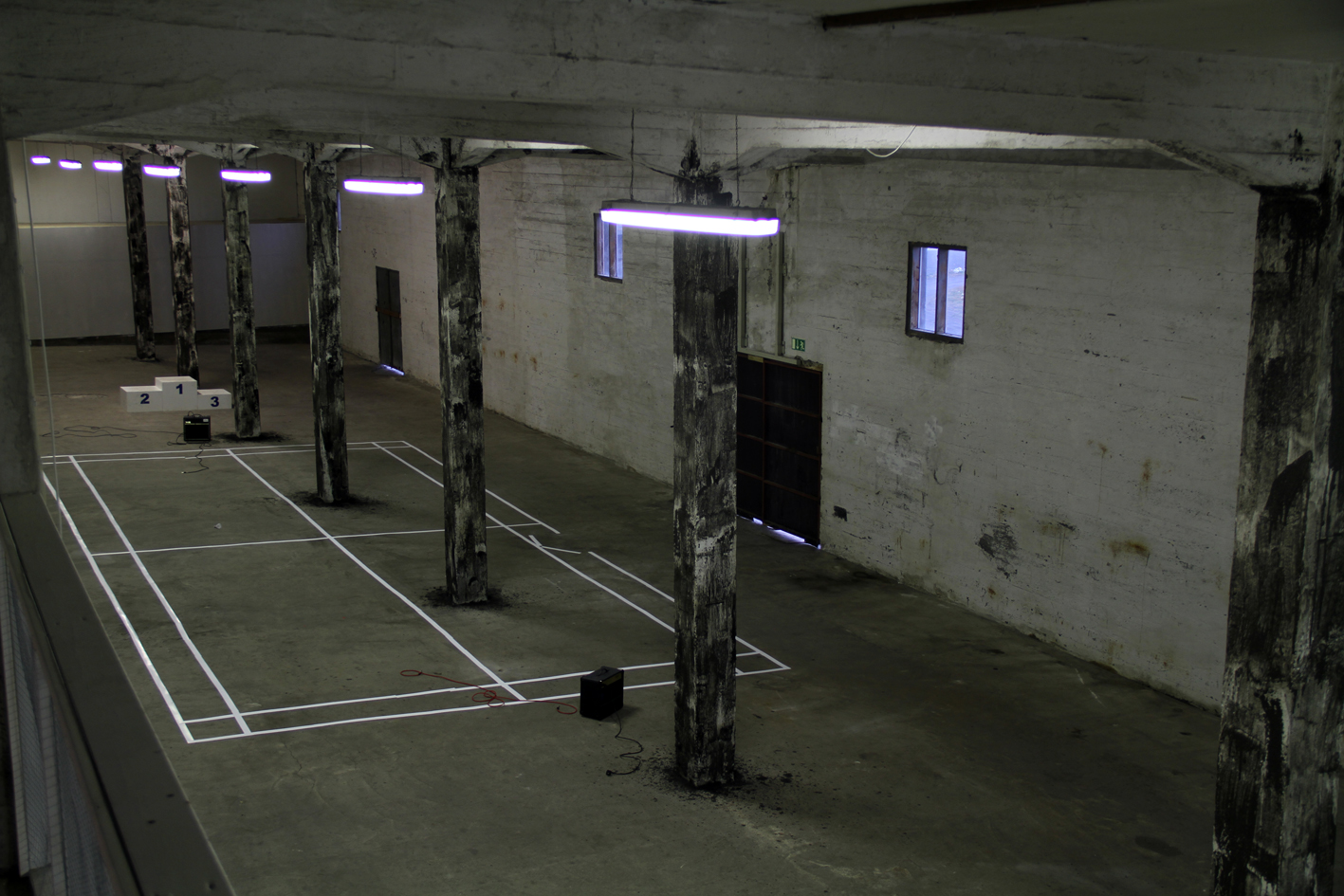
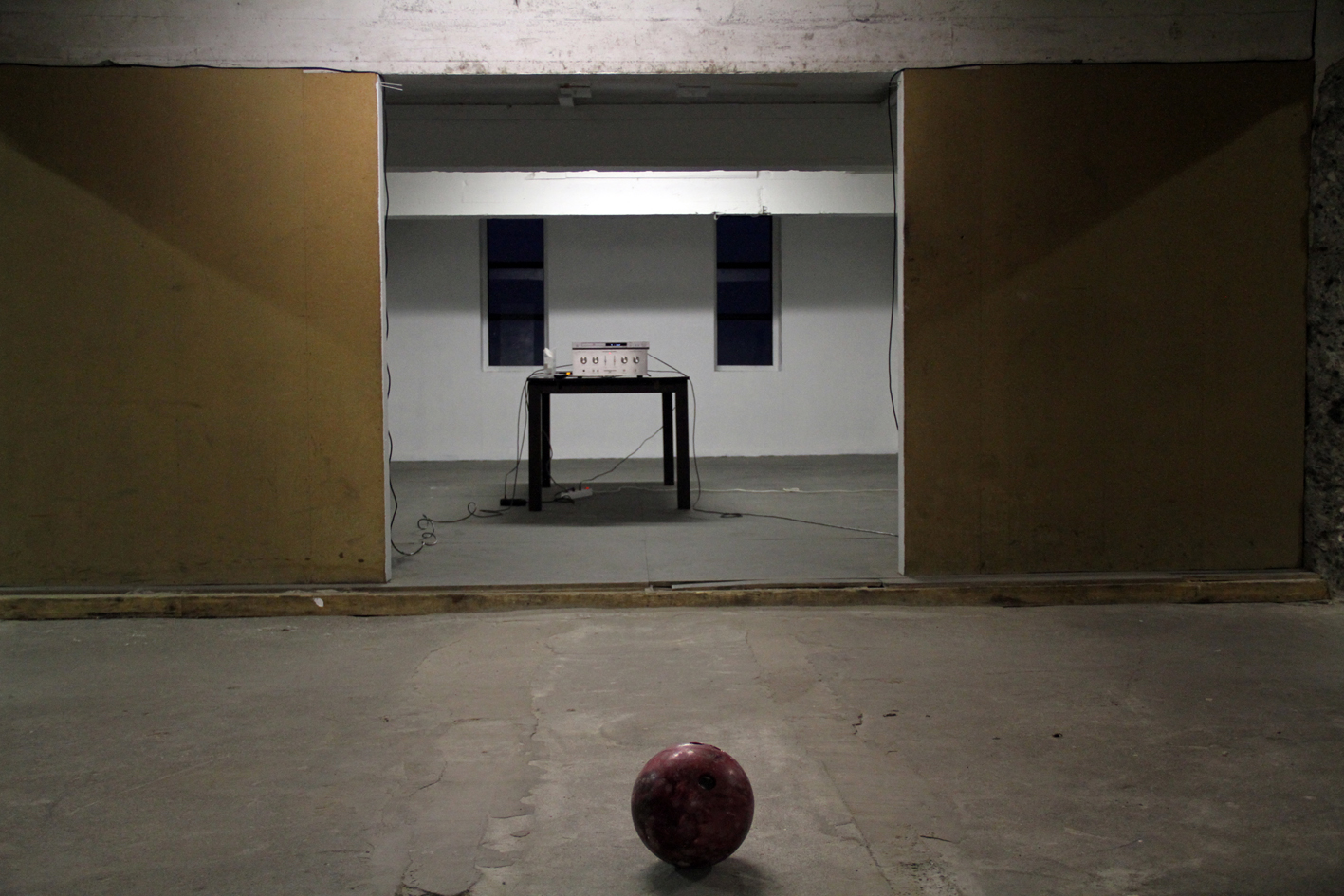
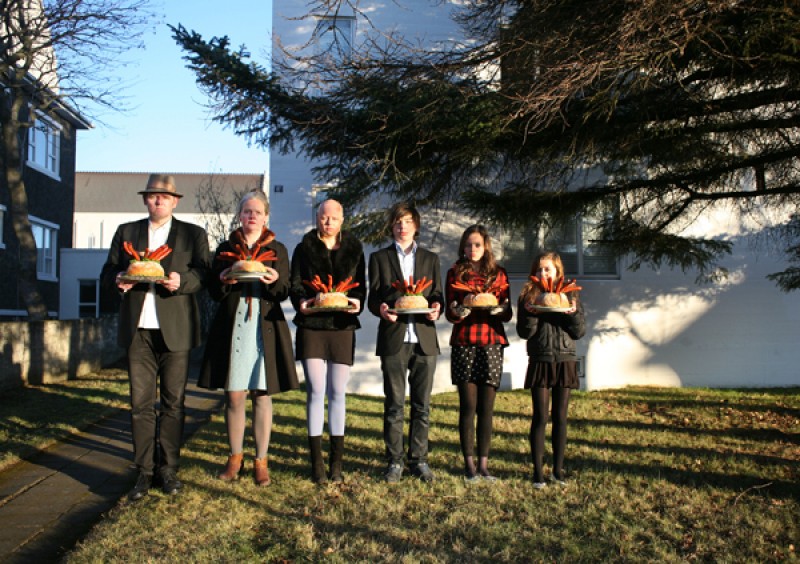
Finnur Arnar Arnarsson frequently explores the relationship between man and his environment. Working across diverse media, he channels his ideas through sculpture, installation, and photography. Space often becomes an active participant in his works, which he routinely positions on the threshold of the fully completed and that which is still taking shape, or even in a state of limbo. Finnur Arnar is the seventh artist to feature in Wonderland, an exhibition series at Ásmundarsafn (Reykjavík Art Museum) where artists are invited to temporarily relocate their studios into the museum, offering the public an insight into their work and creative process.
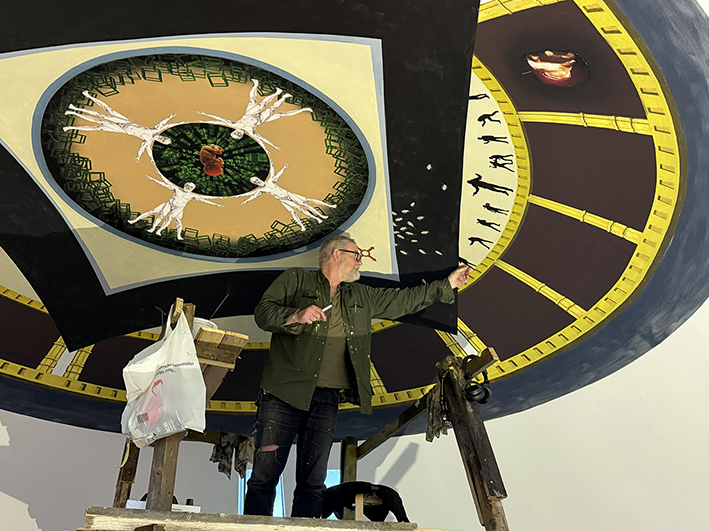
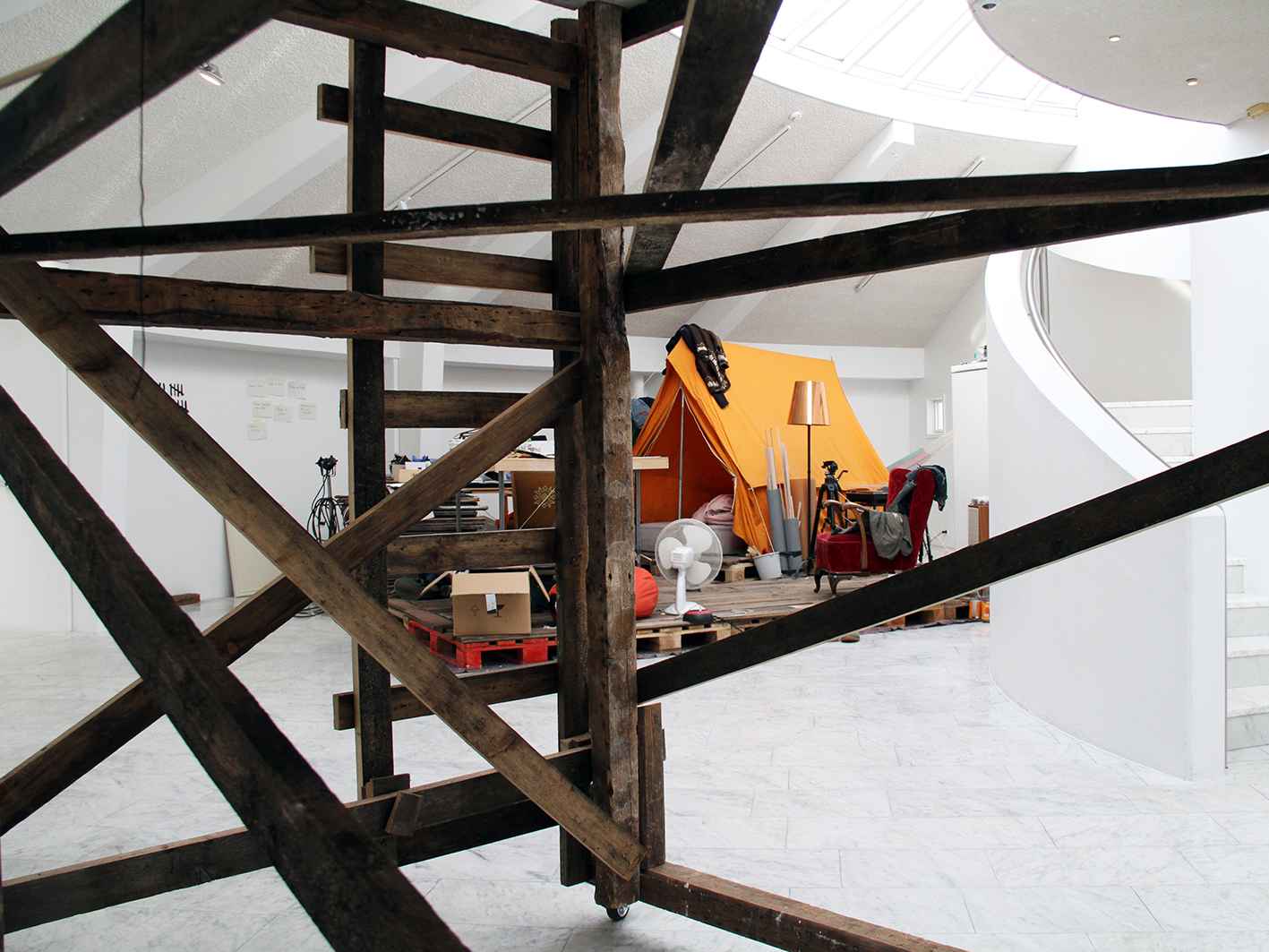
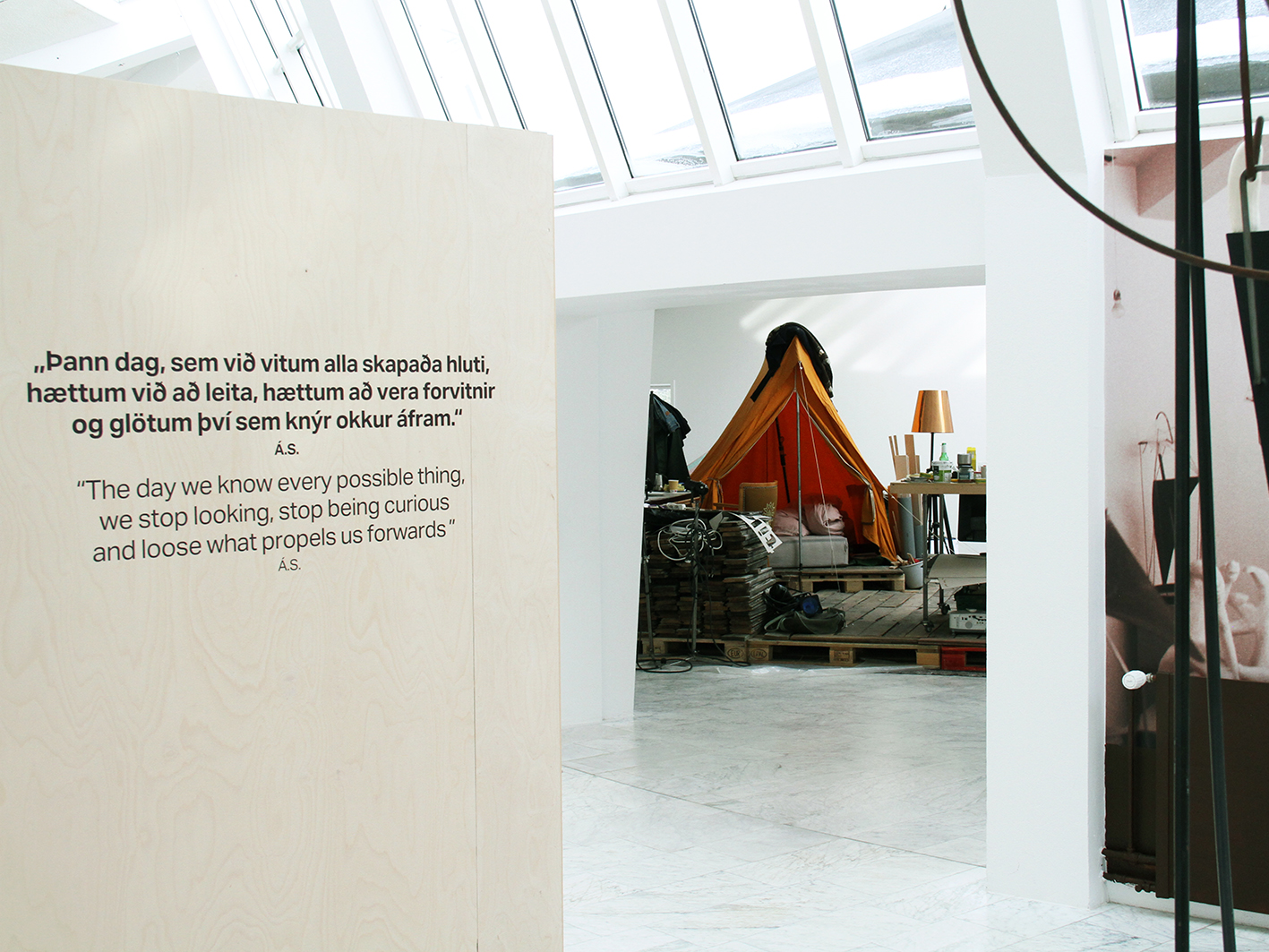
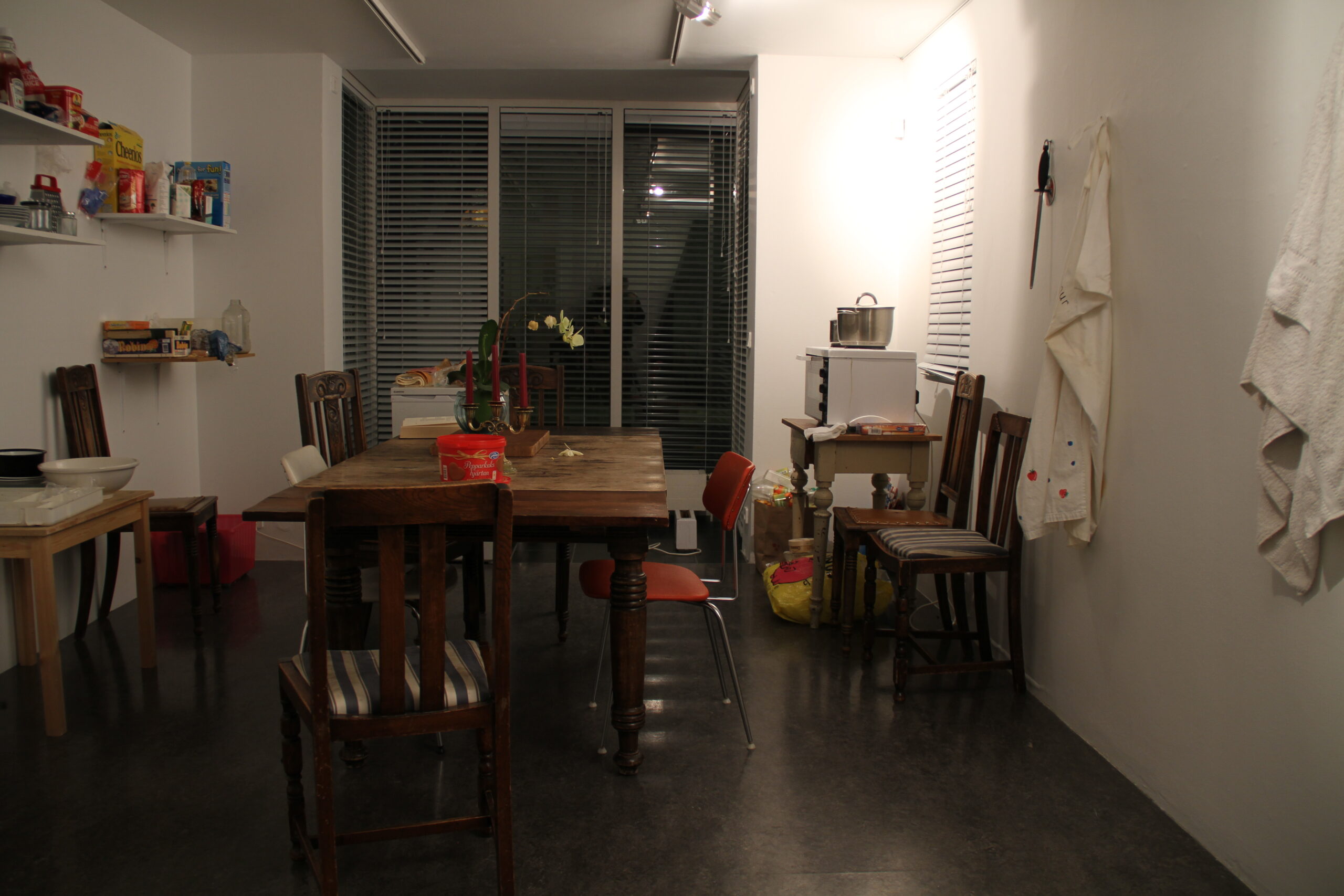
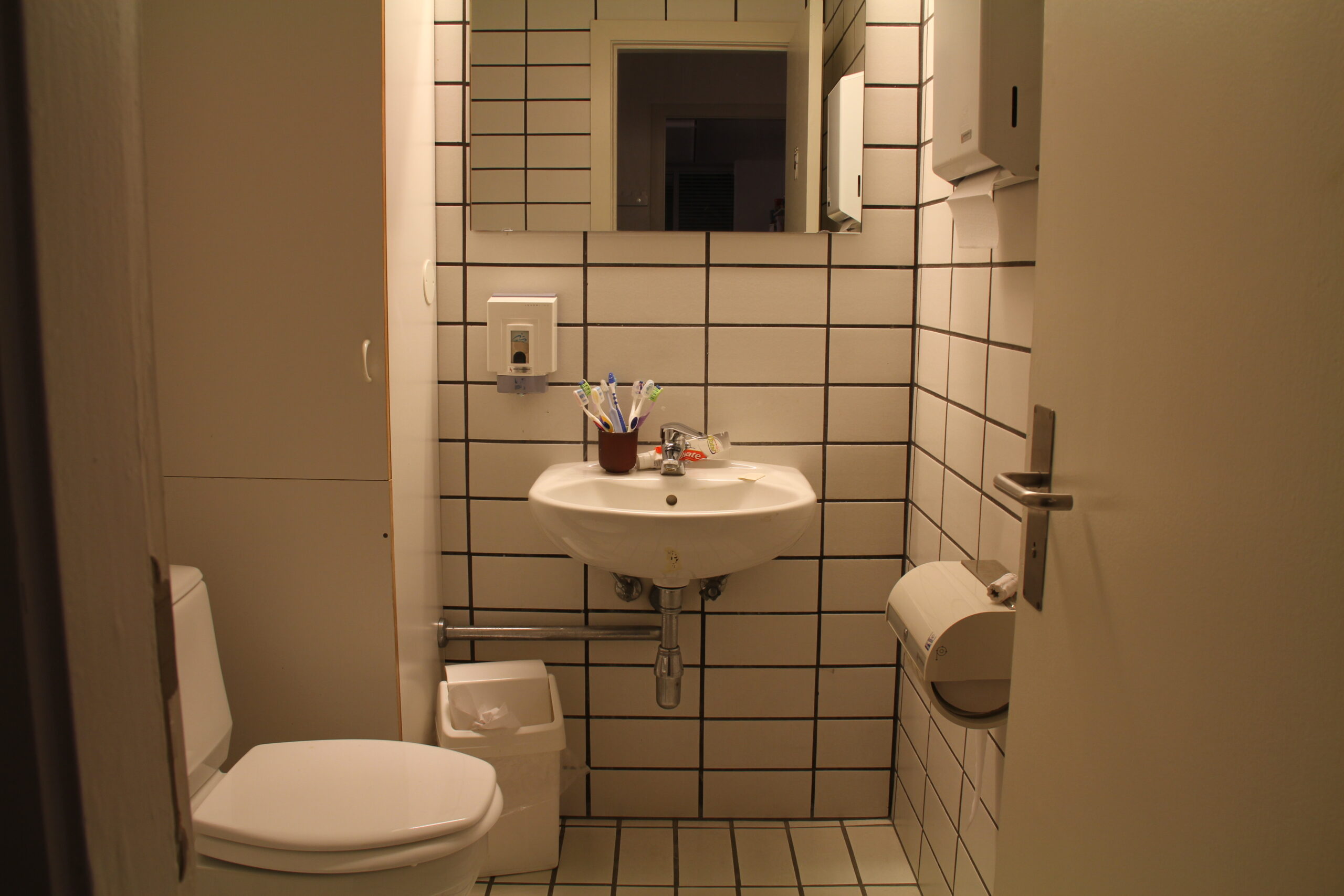
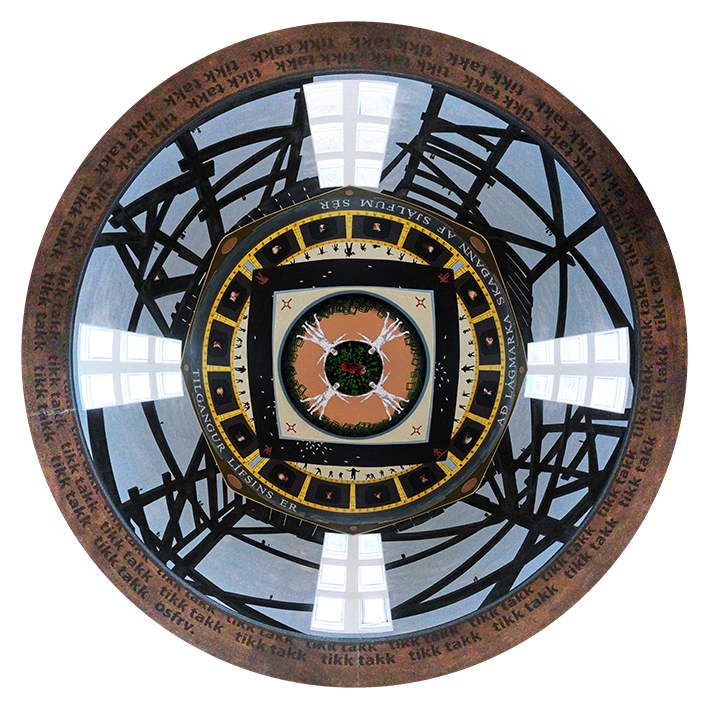
It can be said that Finnur Arnar has, quite literally, gone a step further than most. He has moved both his studio and personal belongings into the museum with the intention of staying and working there continuously. For the past nine weeks, he has lived in the museum, going about his daily life and conducting his work as a visual artist. This action echoes themes in his previous works; it is not the first time he stays overnight where he is setting up an exhibition. During his residency, Finnur worked on the piece The Dome, which came to fruition not only within the artist himself, but through his interaction with the building, its history, and the visitors walking through it—within a space that was once the home and studio of Ásmundur Sveinsson, and remains a venue for living creation.
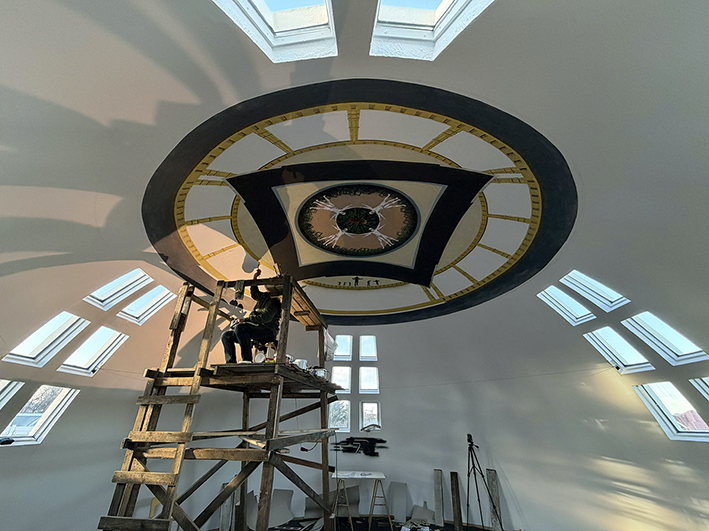
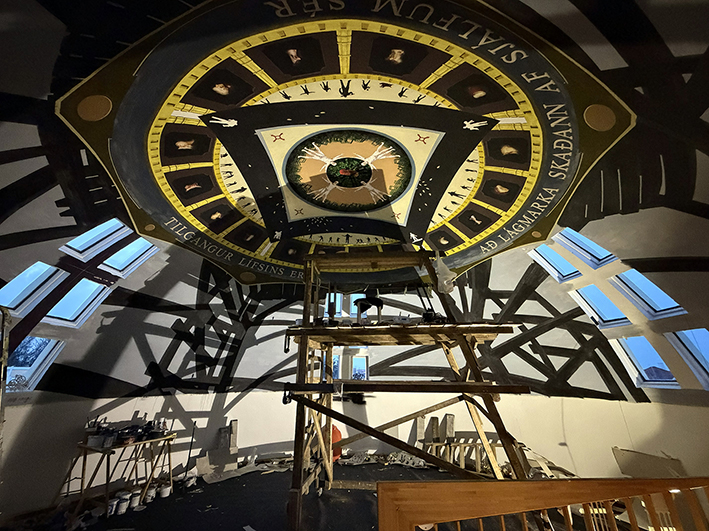
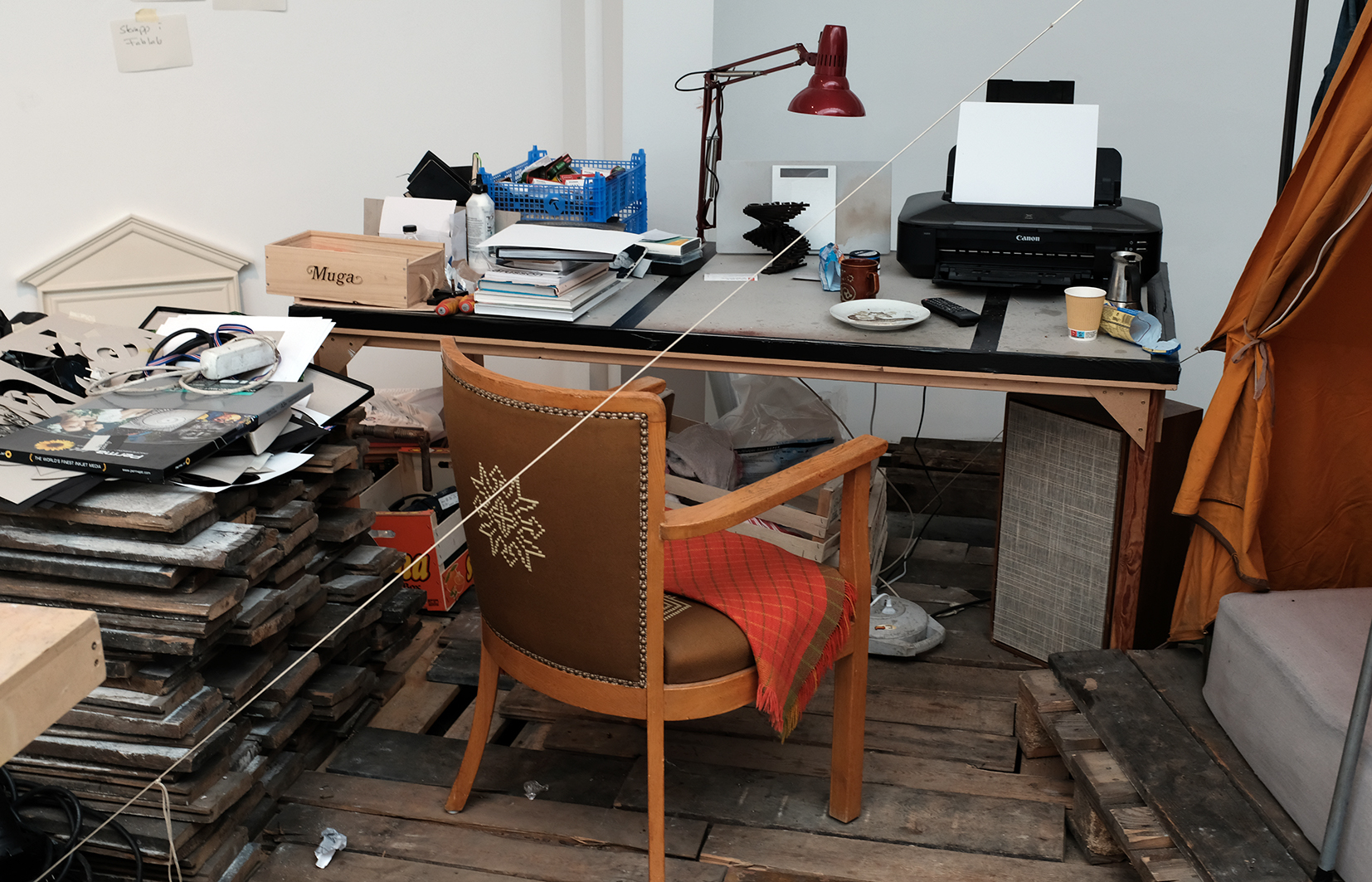
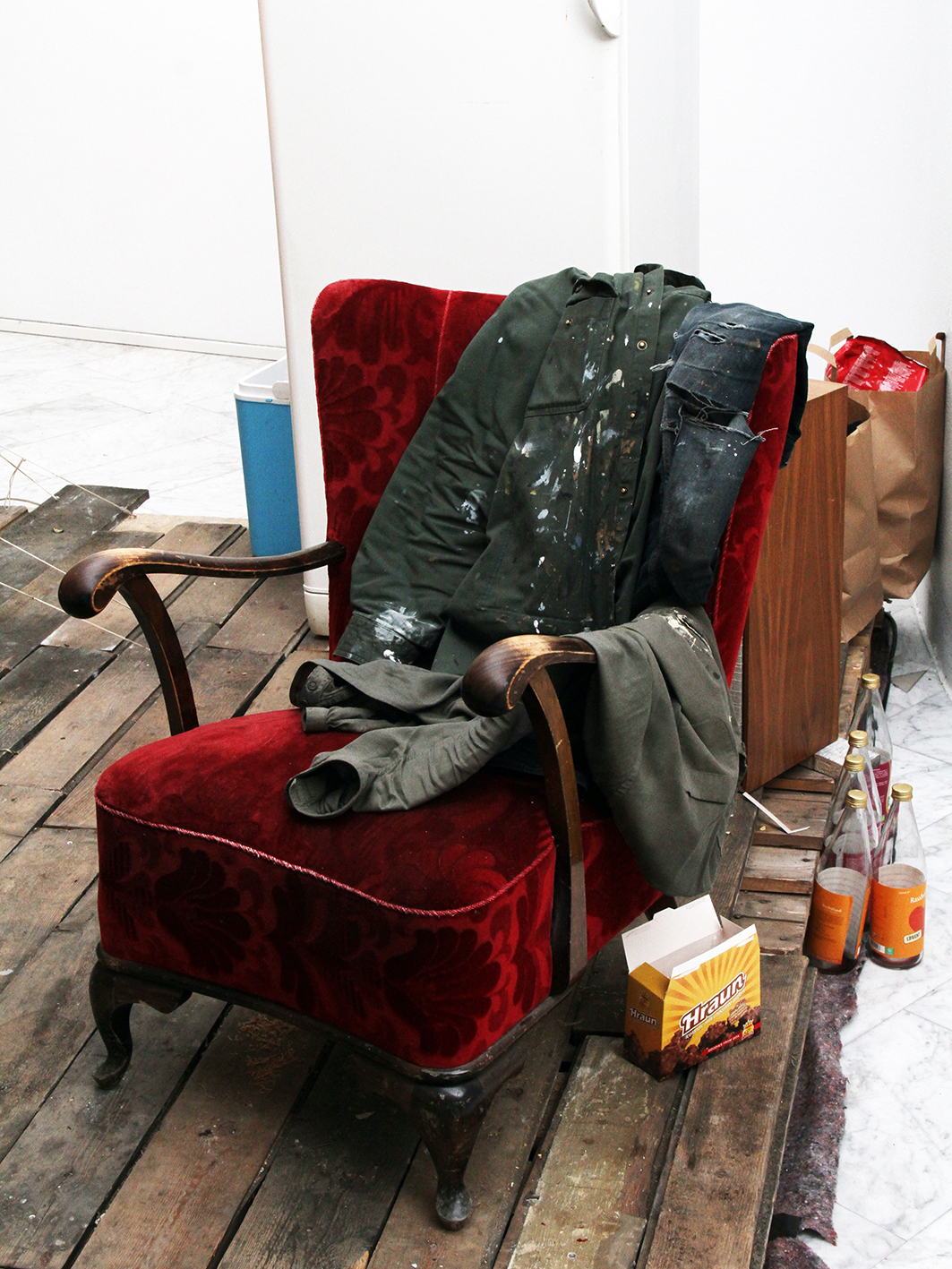
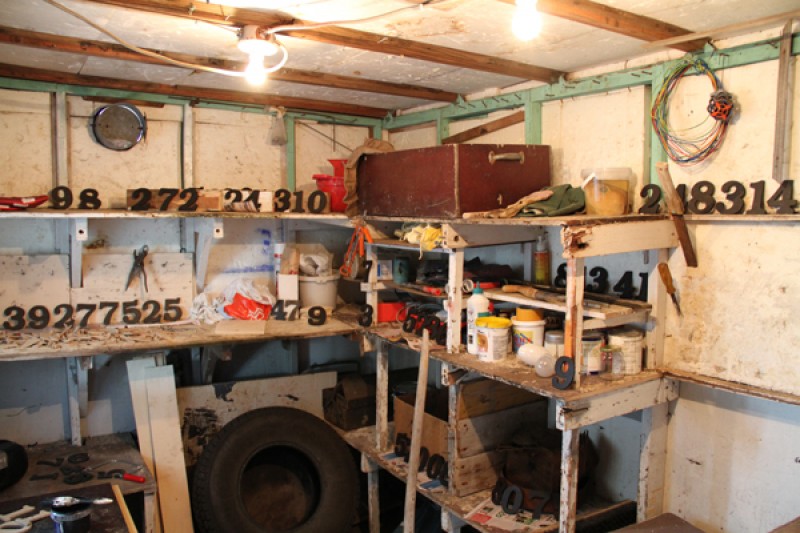
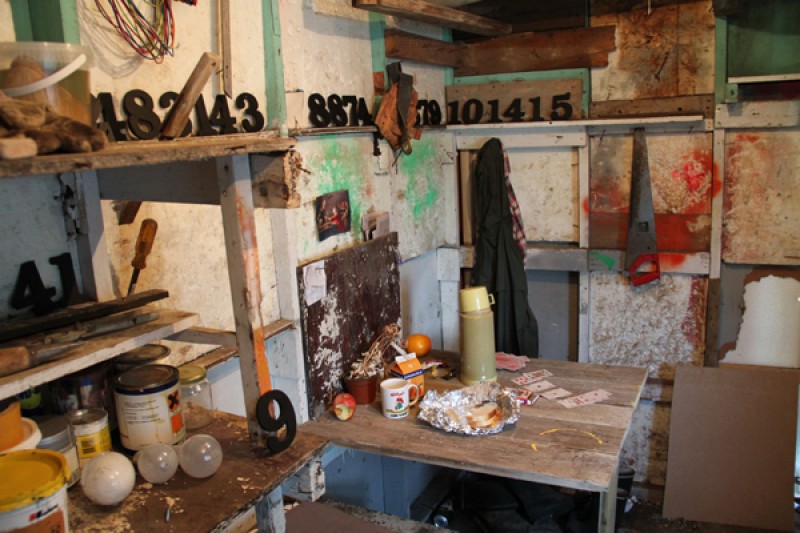
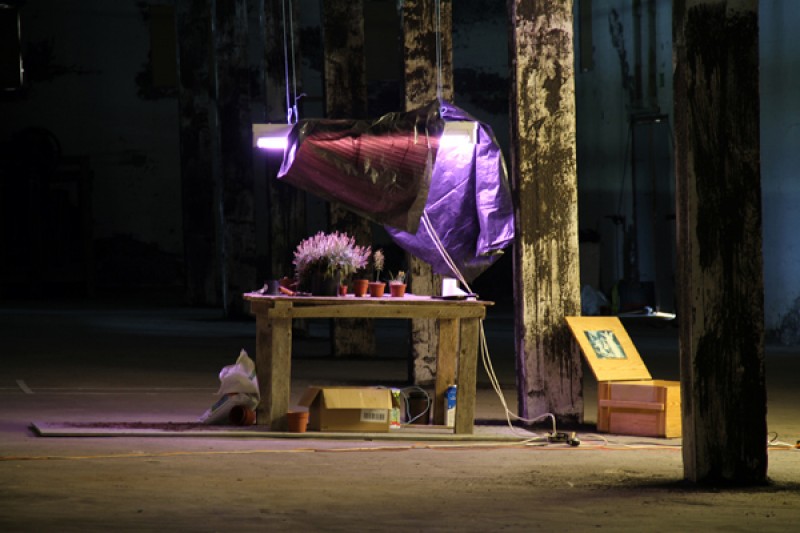
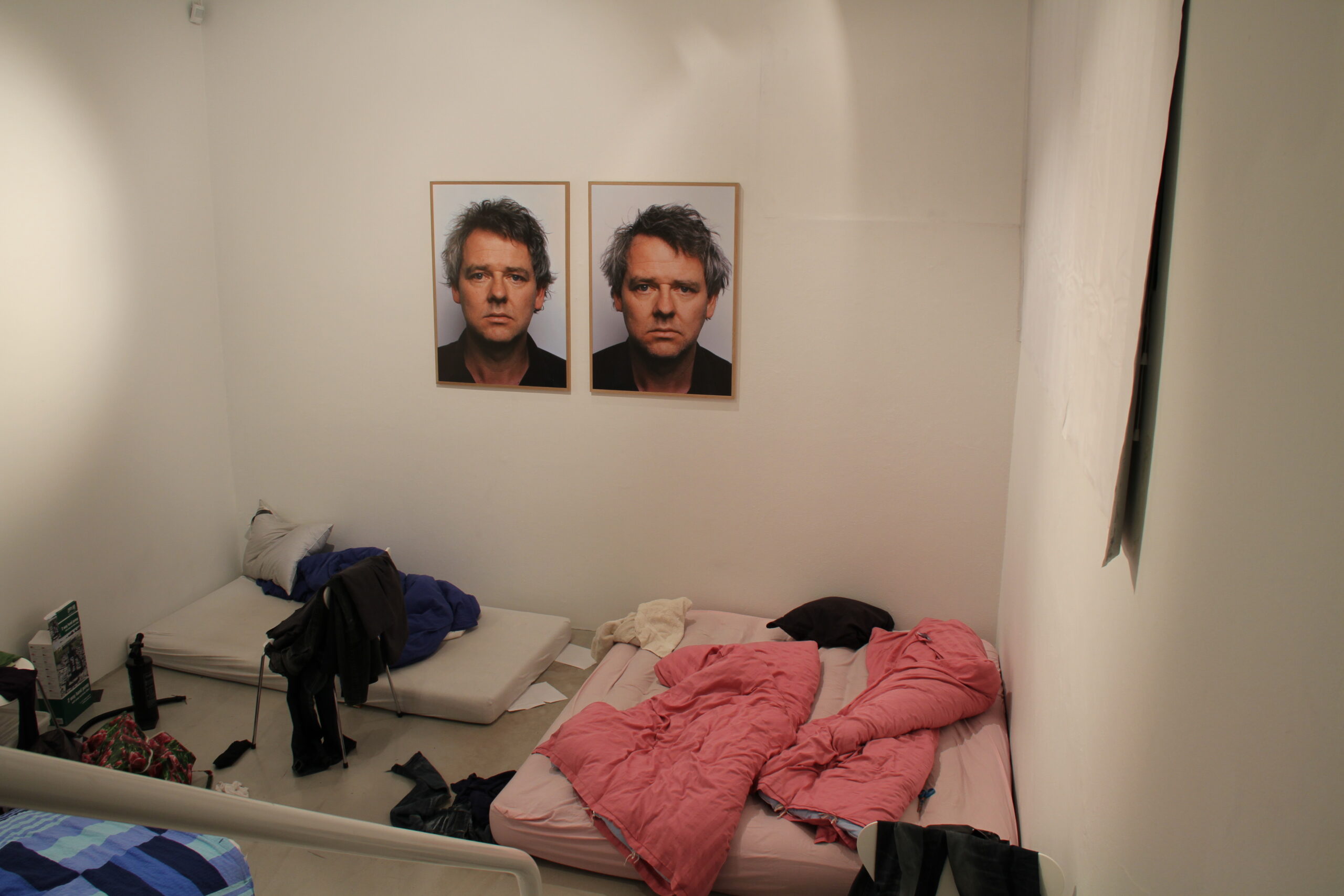
The work The Dome takes shape within this framework. It is essentially divided into three interconnected parts: the campsite, the scaffolding, and the dome itself. The first part, the campsite, deals with the act of moving into the museum. In this way, life and art merge, and the artist’s daily life becomes part of the work. At the same time, Finnur touches upon the fateful sentiment that art chose him, rather than he choosing it. Creation begins before anything is actually made—in the act of existing, breathing, waiting, and observing. In the campsite, existence appears raw and exposed: traces of a human being, a bed that is neither a home nor an exhibition hall, but a space in between.
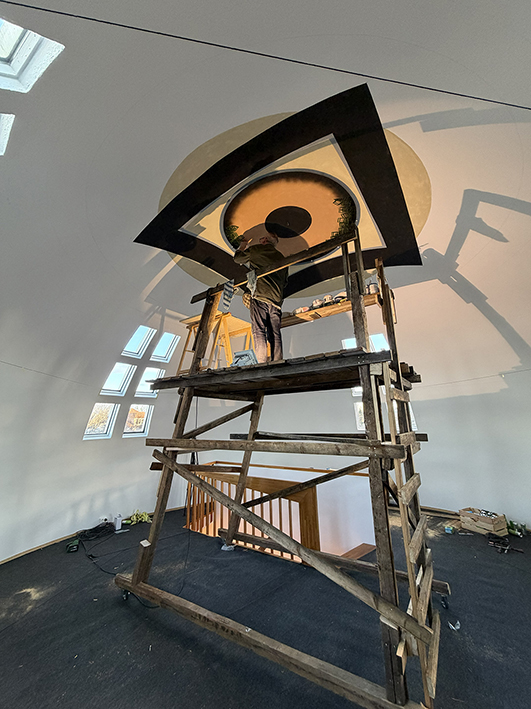
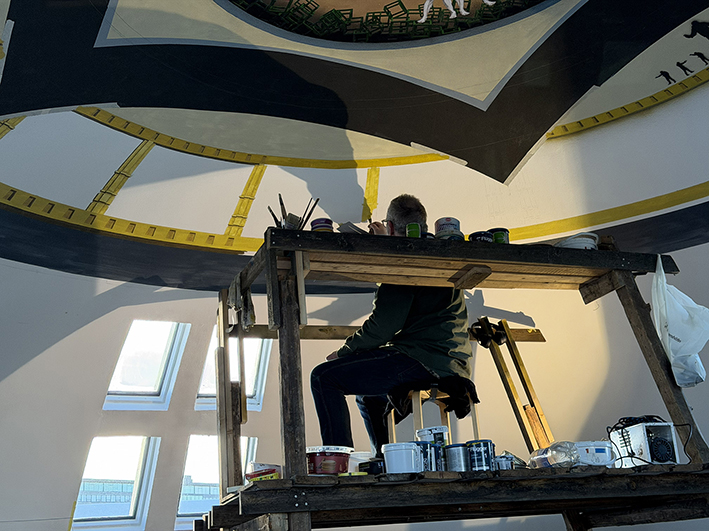
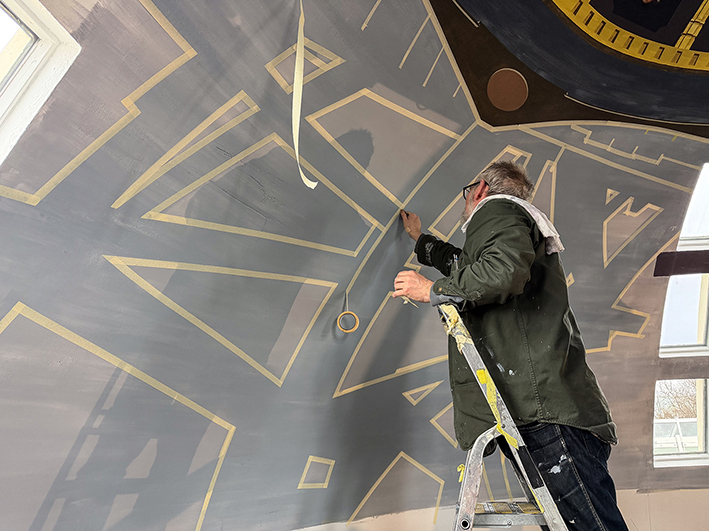
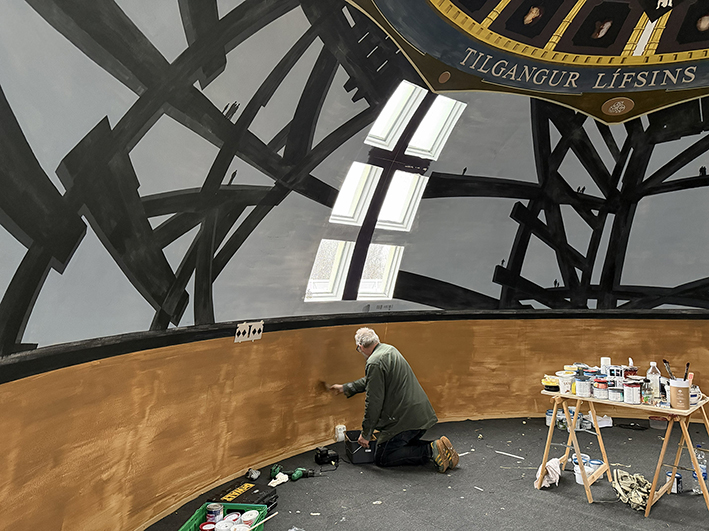
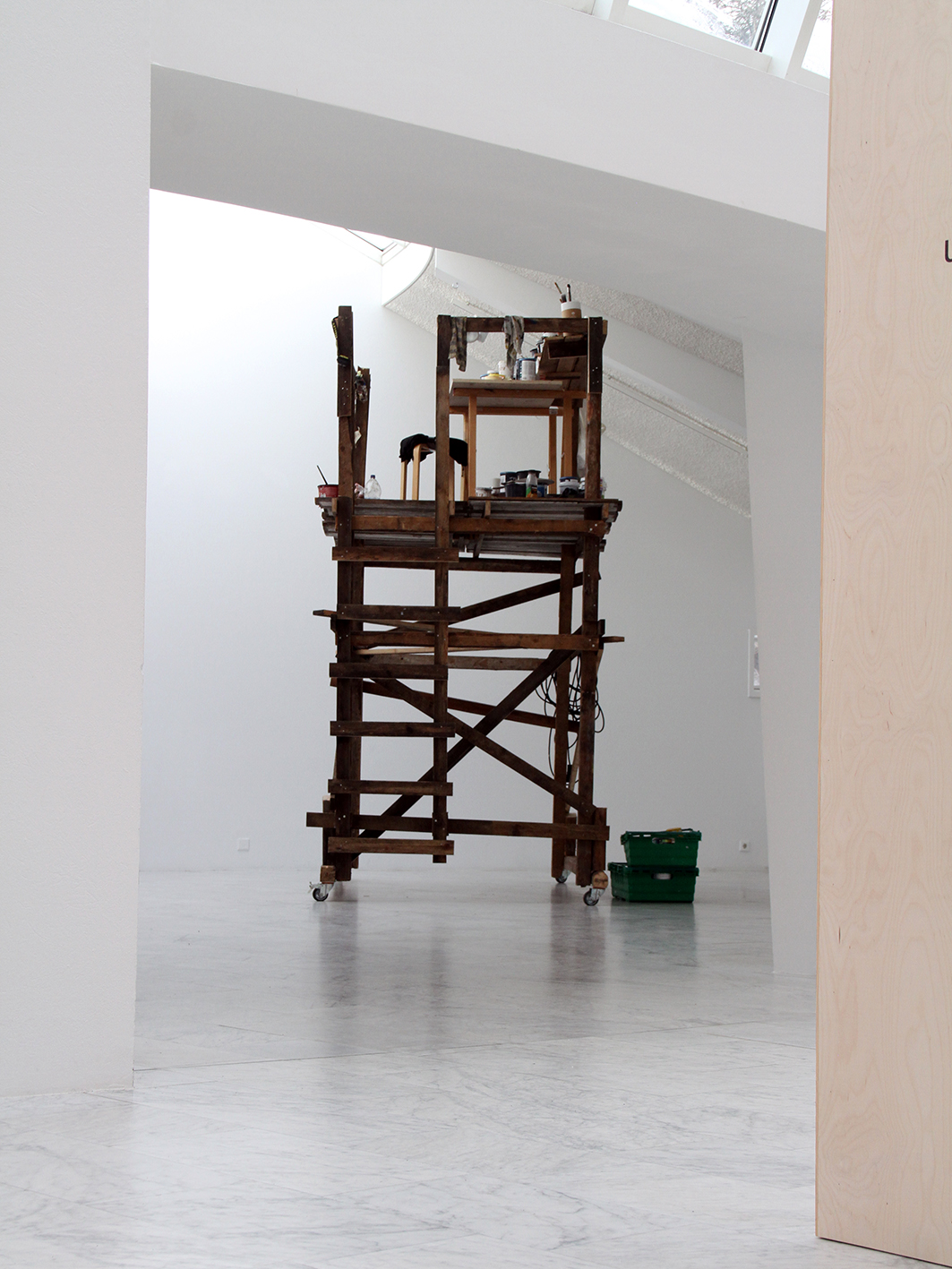
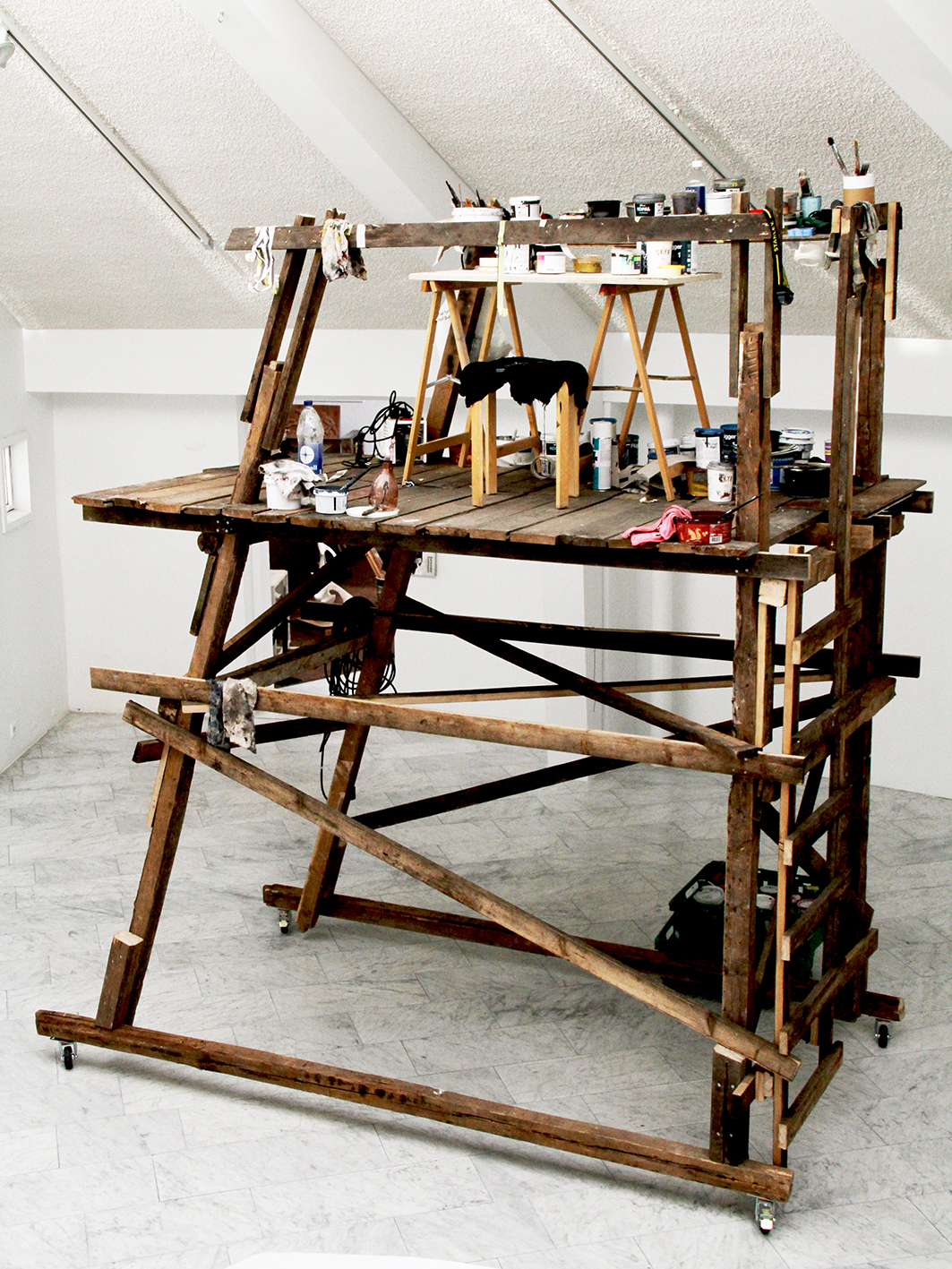
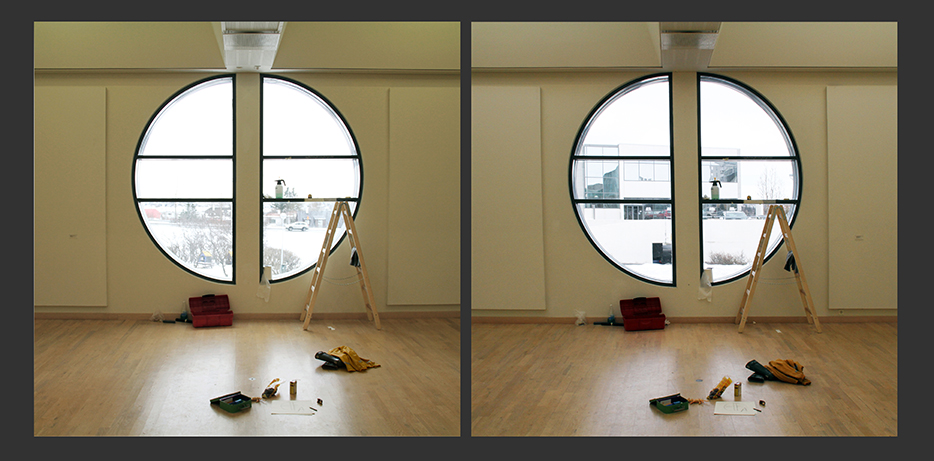
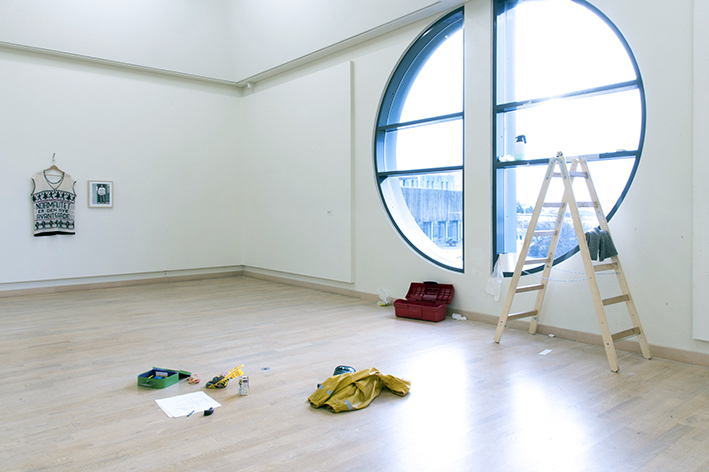
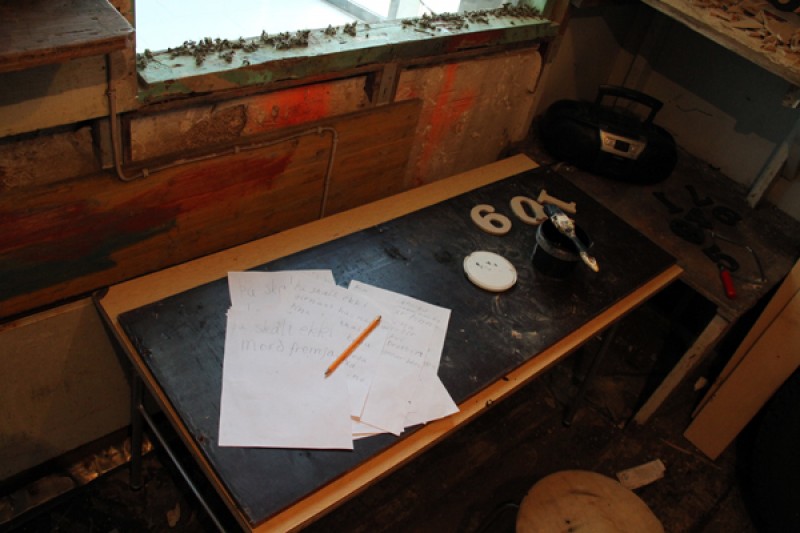
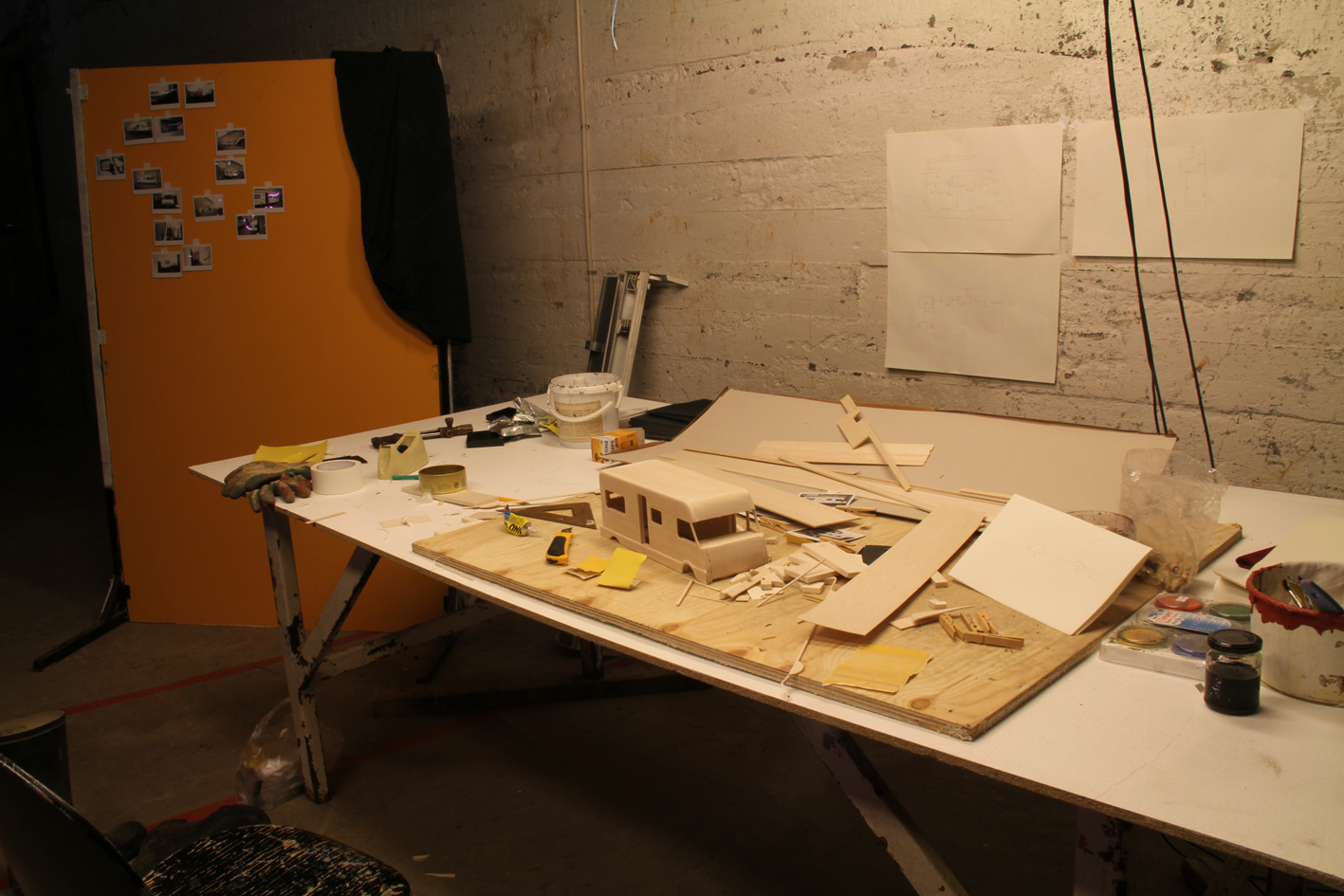
The next part of the work—the scaffolding—brings the labor itself to the forefront. Creation is not merely an idea but a practice, a constant endeavor: testing, failing, and shaping. During his stay at the museum, Finnur has received visitors during public opening hours, answered inquiries, and continued working on the piece. The working process—the tools, the materials, and the experimentation—is thereby rendered visible and constitutes an inseparable part of the whole.
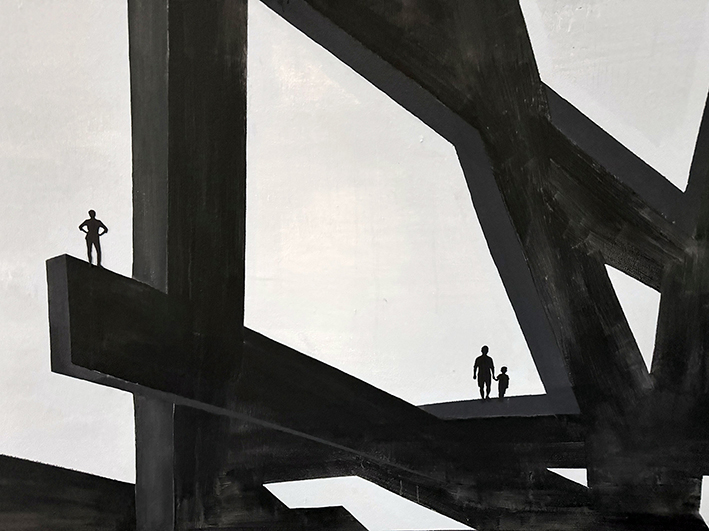
The third part of the work refers to the physical dome of the building, a ceiling mural that Finnur has painted in plain view inside the museum’s architectural “dome.” There, he confronts themes that have long preoccupied him: the male animal, the status of the middle-aged man, and the destructive force of masculinity in contemporary times. The imagery draws on our notions of masculinity as shaped by societal concepts, prompting reflections on creation and destruction, the digital and ever-connected world, power, responsibility, and influence. Finnur also references art history and the tradition of the “Great Masters”—the domes of cathedrals that once held an exemplary role, shaping the public’s ideas about morality and life’s direction. Inside The Dome at Ásmundarsafn, the question is inverted: How do we judge ourselves? Consequently, questions also arise about how we take responsibility for our own actions.
Within this tripartite context, a space is formed where personal existence, society, environment, and the material realization of the work converge. Together, the campsite, the scaffolding, and the dome become references to being, doing, and creating. The work emphasizes that art manifests not only in its fully realized form, but also in the process itself—the perseverance and the thought that accompany the act of creation.